How Hidden Chemical Changes Beneath Volcanoes Can Trigger Explosive Eruptions
Hydrothermal alteration, the chemical transformation of rocks by hot, mineral-rich fluids is common in active volcanic systems. It can significantly change the physical properties of volcanic rocks, often weakening them or sealing fractures in volcanic conduits. These changes can strongly influence volcanic hazards, particularly phreatic eruptions, which occur when groundwater rapidly flashes to steam. However, the timescales and mechanisms of hydrothermal alteration in volcanic conduits are not well understood.
A recent study by Beneath the Waves PhD student Rachelle Sanchez and colleagues (2026)(external link) investigates these processes at Te Maari, which is a vent within the Tongariro volcanic complex in New Zealand and has experienced multiple hydrothermal-driven eruptions.
Hydrothermal alteration plays a critical role in this system by modifying rocks along fluid pathways and volcanic conduits. At volcanoes like Tongariro, circulating hot fluids interact with surrounding rocks, dissolving some minerals and precipitating others. Over time, this process creates alteration minerals such as clays, sulfates, and silica, which can fill fractures and pores in the rock. Understanding the rate at which these mineral changes occur is essential because they can influence the stability of volcanic conduits and the likelihood of explosive activity.
Methods and Approach
The study combined various analytical methods such as petrographic analysis (examining rock thin sections under a microscope to identify mineral textures and alteration patterns), mass balance techniques (measuring chemical gains and losses during alteration to quantify fluid–rock interactions) and mineralogical and geochemical characterisation (i.e. determining the types of alteration minerals and the conditions under which they formed) to reconstruct the alteration history of rocks from Te Maari. By integrating these approaches, the study reconstructed how hydrothermal fluids moved through the volcanic system and altered the rocks over time.
Key Findings
The study indicates that significant alteration in volcanic rocks can occur over relatively short geological timescales (decades to thousands of years). This suggests that hydrothermal systems within active volcanoes can evolve quickly, even between eruptive events. Hydrothermal minerals often seal fractures and pores within volcanic rocks. This sealing reduces permeability, restricting the movement of gases and fluids within the volcanic conduit. When fractures become sealed, pressure from trapped fluids can build up. This pressure accumulation may trigger phreatic eruptions, which occur when pressurised water flashes into steam and violently fragments rock. The study has identified several phases of hydrothermal alteration, indicating that fluid flow and chemical reactions changed over time. These stages reflect shifts in temperature, fluid composition, and volcanic activity.
Implications for Volcanic Hazard Assessment
This study provides new insights into the timescales and mechanisms of hydrothermal alteration at the Te Maari vent of Tongariro volcano. By combining petrographic observations with geochemical mass-balance analyses, the researchers demonstrate that alteration processes can significantly modify volcanic rocks over relatively short timescales. These changes can influence fluid flow, pressure buildup, and eruption dynamics. As a result, understanding hydrothermal alteration is crucial for improving volcanic hazard assessments and anticipating sudden explosive events in hydrothermal volcanic systems.
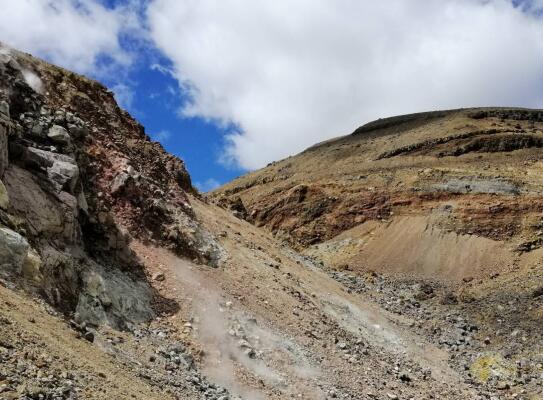
Hero image: Overview photo of the Upper Te Maari crater that exposing layer and layers of hydrothermal alteration deposits